OBSERVE
Real‑time Metrics
Monitor application performance, availability, and security across distributed infrastructure. Analyze metrics across Build, Secure, and Observe with continuous aggregation, long-term retention, and no sampling.

Maximum data aggregation time
months metrics data retention
response time for large datasets
Complete and integrated visualizations
Detect anomalies instantly
Spot traffic spikes, error surges, and performance degradation as they happen so teams can react before issues spread across regions.
Optimize application performance
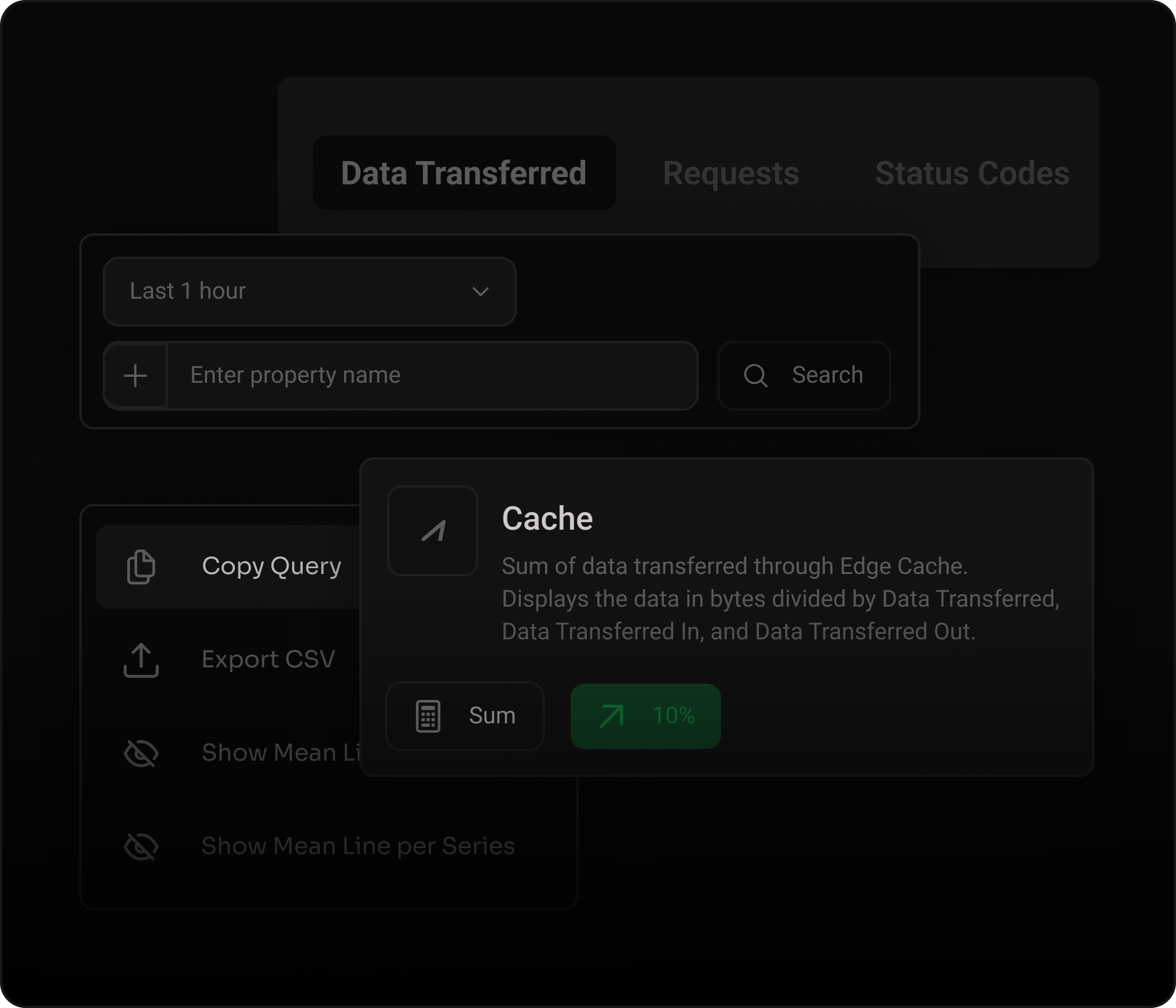
Analyze latency, response times, bandwidth, and error rates across Data Transferred, Requests, Status Codes, and Bandwidth Saving dashboards.
Predict and prevent bottlenecks
Track long-term data trends with up to 24 months of retention to forecast capacity needs and optimize infrastructure scalability.
Monitor security threats in real time
Track WAF threats, Bot Manager activity, and DNS query patterns with breakdowns by country, IP, host, and attack category in Secure dashboards.
Advanced filters and comparisons
Slice data by host, status code, request method, or geographic location. Share filtered views via encoded URL parameters with your team.
GraphQL API and Grafana plugin
Access data programmatically with the GraphQL API or use the Azion Grafana plugin to build custom dashboards, Top X metrics, and specific status code views.
Observability without complexity
100% of your data. No sampling, ever.
Monitor metrics from all Azion products with continuous updates and aggregation windows of up to 10 minutes.
Retain up to 2 years of history for performance analysis, capacity planning, and compliance audits.

Dashboards built for fast decisions
View real-time dashboards with advanced filters and flexible time ranges, from Last Hour to Last 6 Months.
Compare changes using delta indicators, export reports to CSV, and use visual guides like tooltips and mean lines to quickly identify patterns and validate impact.

Azion Console and GraphQL API
Track metrics through prebuilt dashboards in the Azion Console or access data programmatically using the GraphQL API, with automatic aggregation intervals and precise filtering by host, status code, region, or method.
Explore queries in GraphQL Playground to build custom visualizations and historical analyses aligned with your workflows.

Multi-product coverage across Build, Secure, and Observe
Monitor metrics from Applications, Tiered Cache, Functions, Image Processor, WAF, DNS, Bot Manager, and Data Stream in one unified view across distributed infrastructure.
Dedicated dashboards provide visibility into Data Transferred, Requests, Status Codes, Bandwidth Saving, and more, while integration with Real-Time Events enables deeper investigation using request-level logs when needed.

Everything running. Everything visible.
Frequently Asked Questions
What is the maximum data aggregation time?
The maximum time for data aggregation to occur is 10 minutes. When you select the Last Hour time range, Real-Time Metrics automatically refreshes your data every one minute.
How long is metrics data retained?
Azion stores your metrics events and logs for up to 2 years (24 months). The current Real-Time Metrics provides data starting from October 15th, 2022. For earlier data, you can use Historical Real-Time Metrics.
Which products can I monitor with Real-Time Metrics?
You can monitor metrics across three categories: Build (Applications, Tiered Cache, Functions, Image Processor), Secure (WAF, Edge DNS, Bot Manager, Threats Breakdown), and Observe (Data Stream). Some products like Data Stream, Functions, and Edge DNS require subscription and activation.
Can I access metrics data programmatically?
Yes. Real-Time Metrics fetches data using the Azion GraphQL API. You can copy chart queries directly from the console, use the GraphQL Playground, or build custom dashboards with the Azion Grafana plugin. The API supports up to 10,000 lines per query and 120 requests per minute.
Is sampling used?
No. Real-Time Metrics provides 100% of your data with no sampling. It uses an at-most-once approach focused on performance. On average, the difference between Real-Time Metrics and Azion Billing data is smaller than 1%.
What time ranges are available?
You can select from Last Hour, Last 24 Hours, Last 7 Days, Last 30 Days, and Last 6 Months. You can also set custom date ranges using the calendar fields. The timezone matches your user preferences.
Can I filter and share metric views?
Yes. Real-Time Metrics supports advanced filters by host, status code, request method, geographic location, and more. After applying a filter, the URL is updated with an encoded parameter that you can copy and share with other users.
How do I get started with Real-Time Metrics?
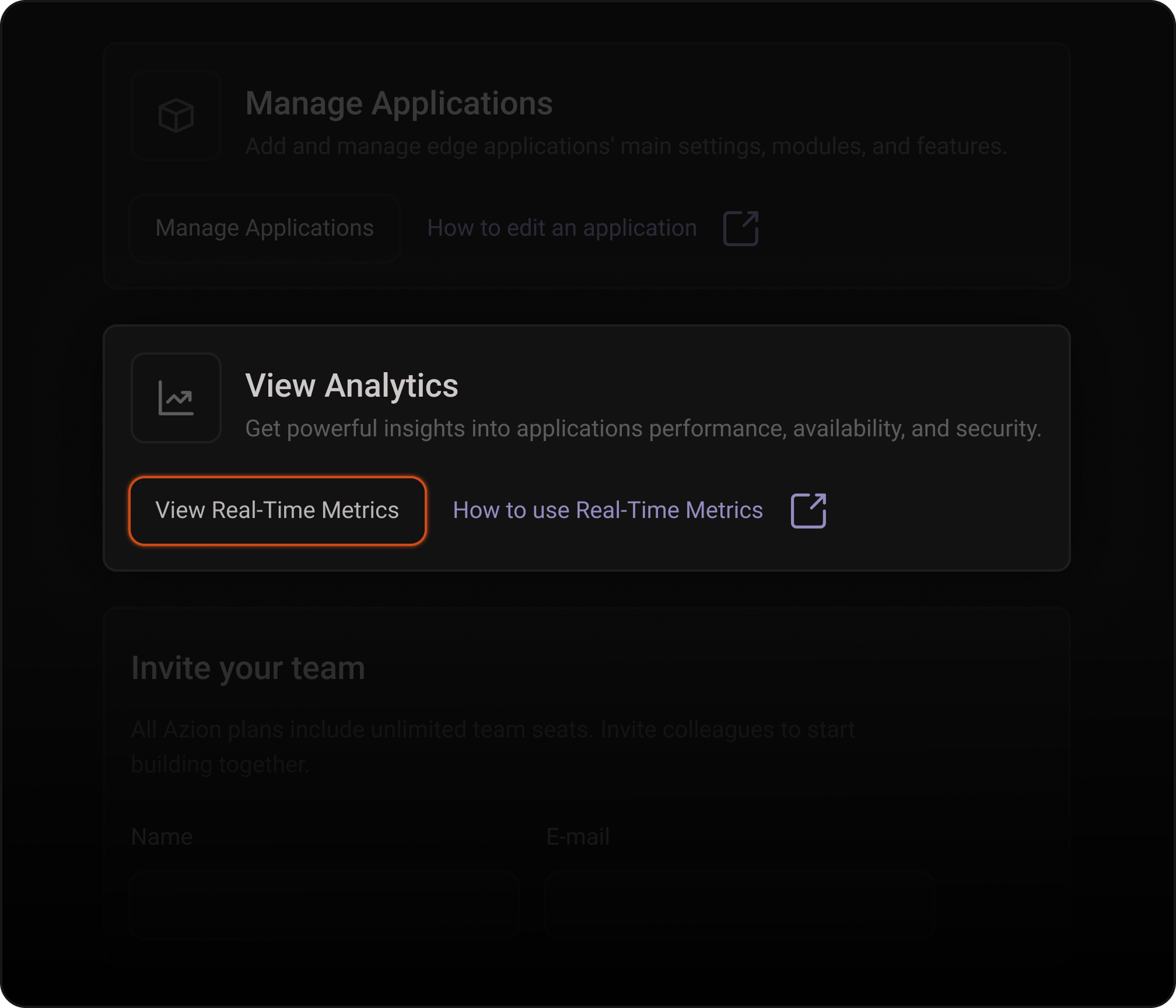
Sign up for a free Azion account at console.azion.com/signup and navigate to Real-Time Metrics. Select a product category (Build, Secure, or Observe), choose a time range, and start analyzing your charts. See the first steps guide in the documentation for a detailed walkthrough.